Planets continue to parade across the night sky
Joining the beloved winter constellation Orion in the evening sky is a beautiful planetary parade.
More Stories




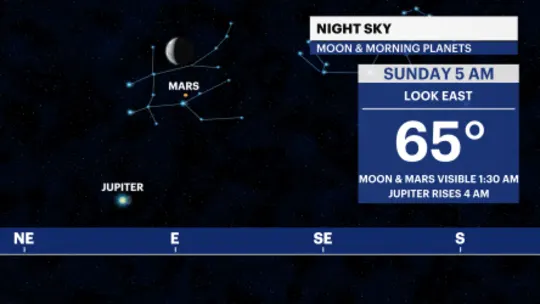
A dark winter sky is the best for observing the celestial sights - and this winter doesn't disappoint.
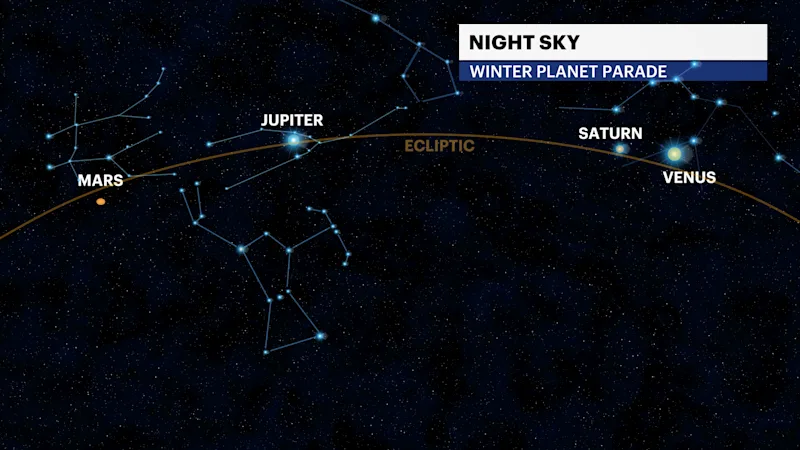
Joining the beloved winter constellation Orion in the evening sky is a beautiful planetary parade.
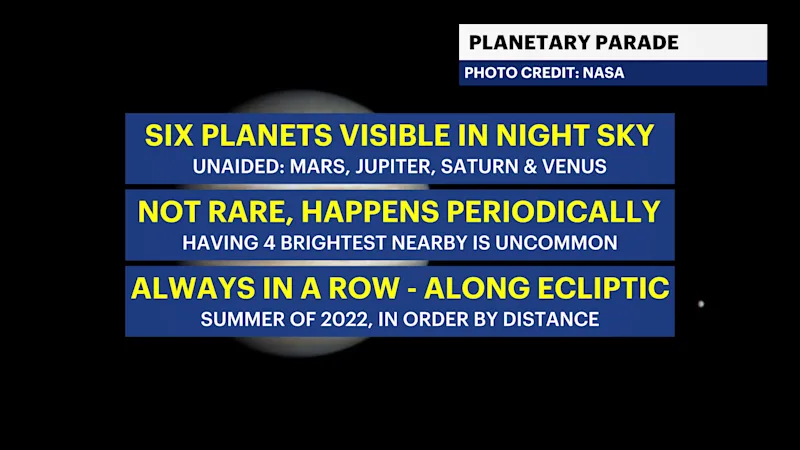
In total, there are six planets visible at the same time, but we can only see four of them with the unaided eye.
Going from east to west right after sunset are Mars, Jupiter, Saturn and Venus.
In between are Uranus and Neptune, but those are so far away, you'll need a binoculars or telescope to see them.
Mercury currently isn't part of the pack, as it's now visible only in the morning.
Now, you've probably heard about some rare planetary alignment thing happening right about now and while part of this is true, it's not exactly the full story.
The planets have been on parade since early December, and they are always in a line.
You may have already noticed that.
Every clear night we've had, there's been something shining brightly and so eye catching, that it's been hard to miss.
As for rare, well not exactly.
This happens periodically.
Back in the summer of 2022, there was a dazzling display ongoing through June and July.
This was actually a somewhat better view, because the planets happened to be arranged in order by distance - and it wasn't 15 degrees out.
The planets always look like they are in a line from our perspective here on Earth and that's because they all in the same plane as they travel around the Sun. This plane is called the ecliptic.
The four brightest planets will be visible through the end of February - that's when things start to change.
Mercury will join the parade, but Saturn may start to fade in the low twilight.
It will get harder to observe because the nights will be noticeably shorter.
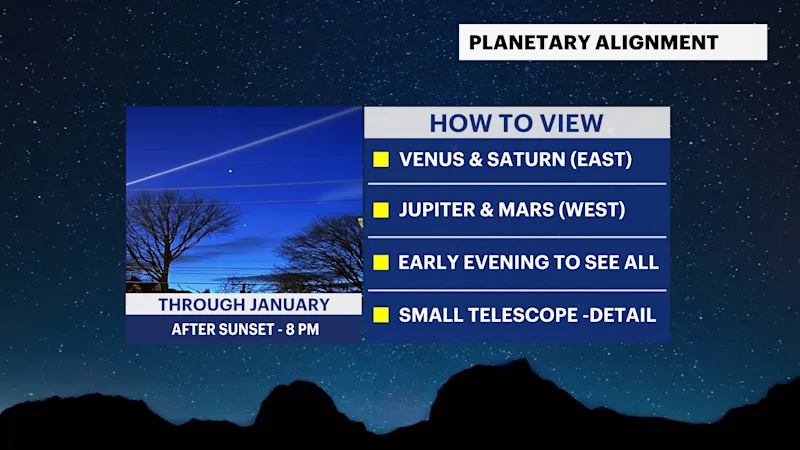
The best time to view the planets is right after sunset through about 8pm.
You'll want to look west at first and go from there. By the end of February, Saturn will be setting earlier and around 6 p.m.
Find a darker sky and let your eyes adjust.
You'll also want to play close attention to the weather forecast for how to dress and what nights will be clear.