
How a new Lafayette exhibition highlights the Revolutionary War hero's New Jersey connections
A handwritten letter from Cranbury days before the Battle of Monmouth is among the Garden State ties featured in a major exhibition on the Marquis de Lafayette.
More Stories


A handwritten letter penned in Cranbury just three days before the Battle of Monmouth is helping tell the story of one of the Revolutionary War's most celebrated figures as New Jersey marks America's 250th anniversary.
The June 25, 1778, letter from the Marquis de Lafayette to Gen. George Washington is among the New Jersey artifacts featured in "Lafayette between France and America: History and Legend," a major exhibition at the National Archives Museum in Paris curated by Lafayette College professor Olga Anna Duhl.
Written as the Continental Army prepared for the Battle of Monmouth, the letter expresses Lafayette's concern about supplies for his troops. It also includes a handwritten postscript by Alexander Hamilton requesting two days' provisions for 6,000 men. The letter urges that Lafayette's troops be "well furnished with spirits." The document is part of Lafayette College's Special Collections and College Archives, which contain about 150 of Lafayette's letters from this period.
"A very special relationship developed between Lafayette and George Washington. That lasted actually his entire life," Duhl said, noting that Lafayette was in frequent communication with Washington as the army prepared for battle.
While the exhibition explores Lafayette's life and legacy in both France and the United States, it also includes several reminders of his ties to New Jersey. Among them are maps documenting his role in the Battle of Monmouth on June 28, 1778, and tracing his 1824 Farewell Tour through the state. During that visit, Lafayette's stops included Newark, Elizabeth, New Brunswick and Princeton, where communities welcomed the returning Revolutionary War hero.
"He was treated like a king by everyone around him," Duhl said of Lafayette's reception during the tour. "Everyone was trying to outdo the others in welcoming the hero."
Although the exhibition is not specifically about New Jersey, Duhl said the state's role in Lafayette's story is represented through those maps and documents, illustrating both his wartime service and his celebrated return to the young nation.
Duhl said Lafayette's legacy remains unique because, unlike America's Founding Fathers, he was a French ally whose contributions to the Revolution earned lasting admiration across the United States.
"People also remember the Franco-American alliance and the friendship that Lafayette started between the two nations," she said. "Lafayette was instrumental in securing this alliance."
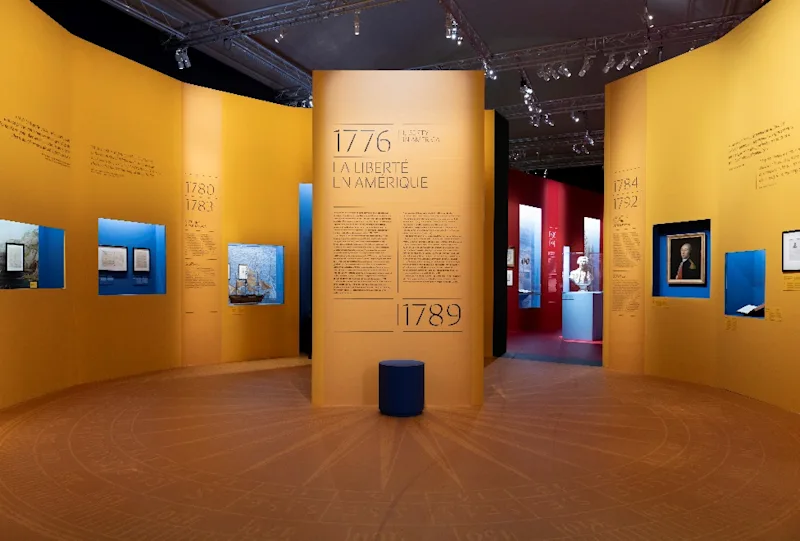
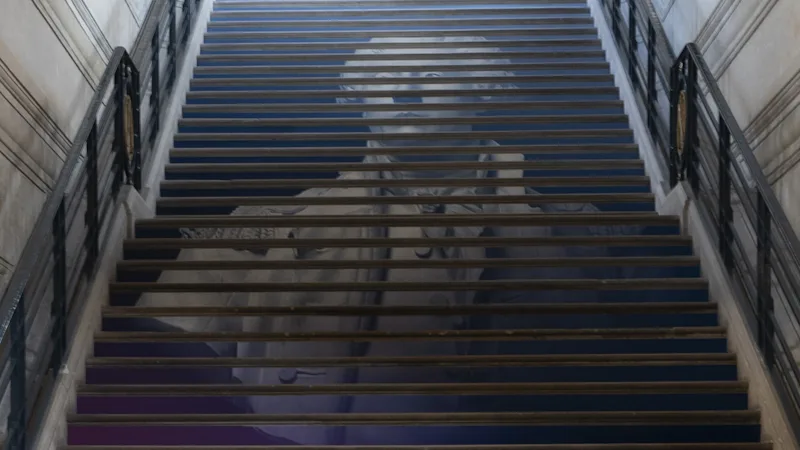
(Photo Credit: Carole Bauer)
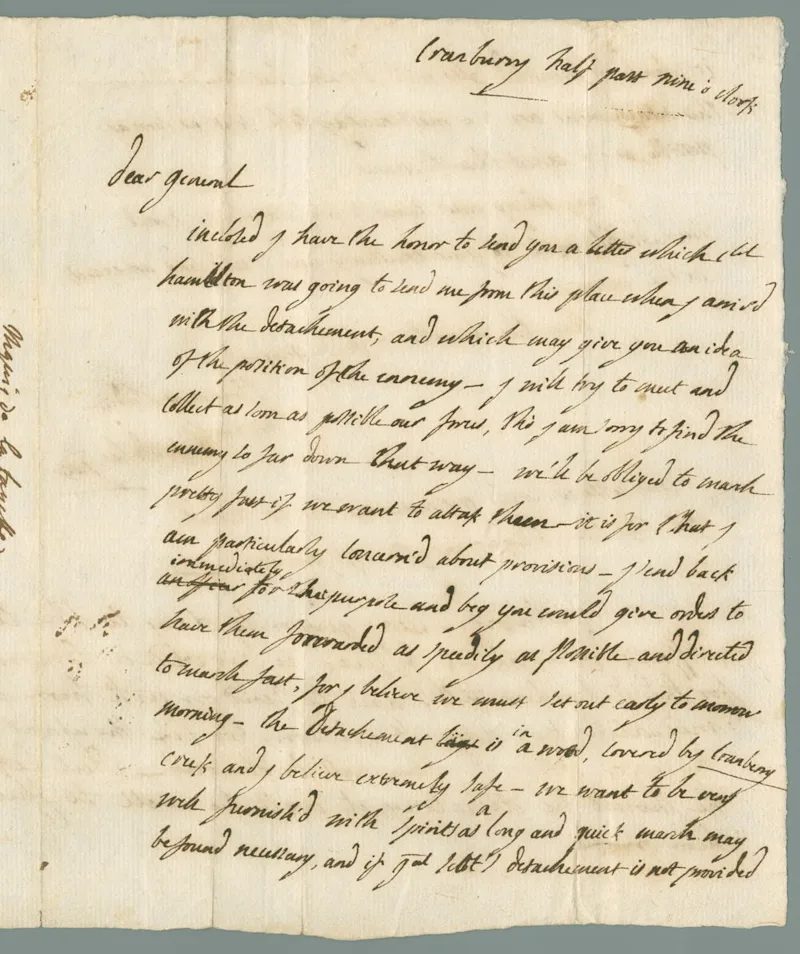
(Letter courtesy of Lafayette College Special Collections and Archives)