Guide: Tips to keep yourself and your loved ones safe from carbon monoxide poisoning
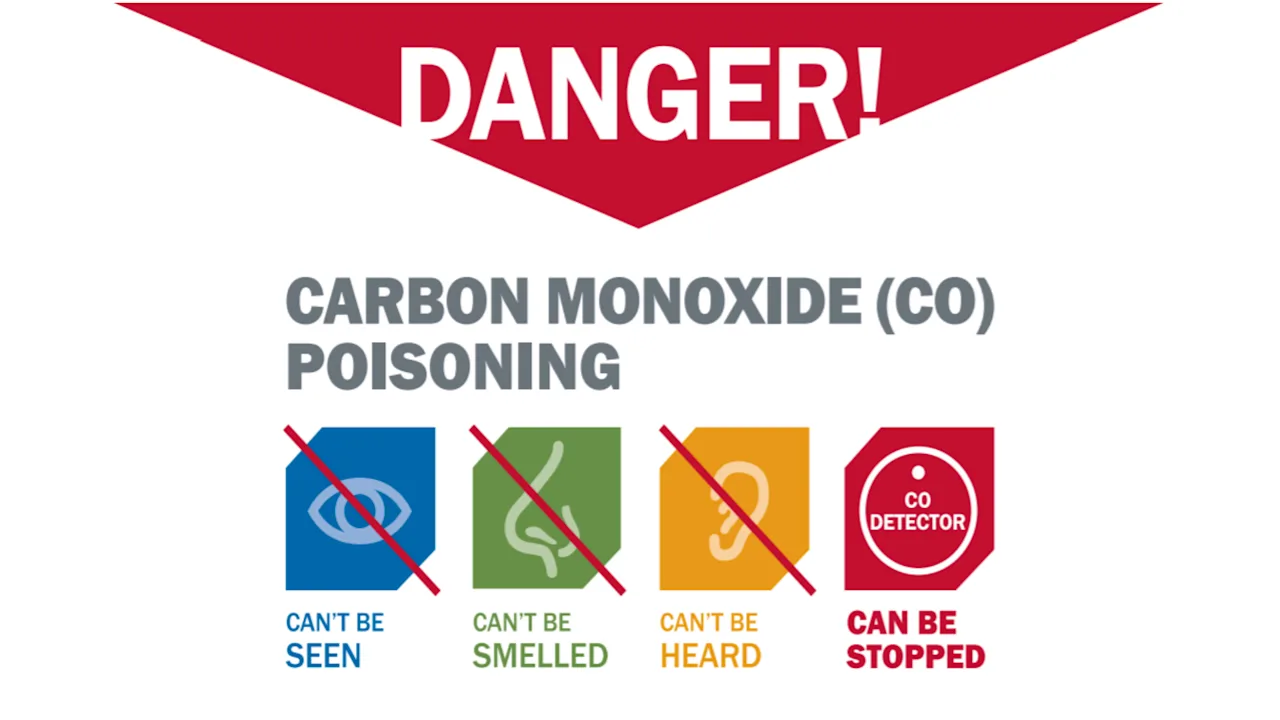
CO is an odorless, colorless gas that can kill without warning. People often don't realize that they're suffering from CO poisoning until they become very ill.
More Stories






According to the U.S. Centers for Disease Control and Prevention, more than 20,000 people are taken to an emergency room, and over 400 people die every year from accidental carbon monoxide (CO) poisoning.
CO is an odorless, colorless gas that can kill without warning. People often don't realize that they're suffering from CO poisoninguntil they become very ill.
Below are some tips to keep yourself and your loved ones safe:
1. What causes CO poisoning?
CO may be released as the result of improper functioning of heaters, boilers, fireplaces, stoves, or any other gas or fuel-powered equipment. When CO is released in an enclosed area such as a home, it may result in CO poisoning.
2. What are the symptoms of CO poisoning?
Symptoms may occur immediately or gradually. Exposure to CO can cause flu-like symptoms, including headache, dizziness, weakness, nausea, and loss of muscle control. Prolonged exposure to carbon monoxide can lead to serious illness and even death. If you experience these symptoms after being in an enclosed area, go out into fresh air immediately. Seek emergency medical help if symptoms do not quickly improve.
3. How can I prevent CO poisoning?
The most important thing you can do is properly maintain heaters, boilers, fireplaces, stoves, and other gas or fuel-powered equipment. Have chimneys checked or cleaned every year as a blockage can cause CO to build up indoors. Be sure there is proper ventilation when fireplaces, wood stoves or other air consuming devices are operated at the same time as your regular heating system. After a snowstorm, clear snow from any outdoor vents. Portable generators should only be used outdoors and away from any windows, doors and
vents.
CO alarms are an important second line of defense. Some states, like New York, have laws requiring CO alarms in residential and commercial buildings. The devices will sound a loud alarm in the case of dangerous levels of CO. The U.S. Consumer Product Safety Commission recommends placing a CO alarm in every area of your home. If just one alarm is installed, it should be placed near the sleeping rooms of the house. Be sure to check the batteries of
your CO alarm at least every six months.
MORE: Tips to heat your home safely this winter
4. Other ways to prevent CO poisoning:
Never use a gas oven or range to heat a room. This can deplete oxygen from the air.
Ensure that any natural gas-burning appliances are installed, maintained and used safely and according to manufacturer instructions.
Do not allow vehicles, lawnmowers, snow blowers, or any gasoline-powered engine to idle in a garage attached to a house, even with the door open. CO can drift into the living space and create a hazardous situation.
Have vehicles’ mufflers and tailpipes checked on a regular basis to prevent accidental CO build-up.
Avoid build-up of carbon monoxide fumes by opening the fireplace damper before lighting a fire and keep it open until the ashes are cool.