From Negro League baseball to a second life: The remarkable history of Paterson’s Hinchliffe Stadium
Built during the Great Depression, Hinchliffe Stadium hosted baseball legends, generations of Paterson students and major community gatherings before falling into disrepair. A decades-long preservation effort brought the landmark back to life.
More Stories


Some of baseball’s greatest players once competed at a stadium in Paterson, even as the major leagues refused to let them play.
On Sept. 5, 1933, the New York Black Yankees defeated the Pittsburgh Crawfords 6-3 at Hinchliffe Stadium. Pittsburgh’s lineup included Josh Gibson, Oscar Charleston, James “Cool Papa” Bell and Judy Johnson: four future members of the National Baseball Hall of Fame.
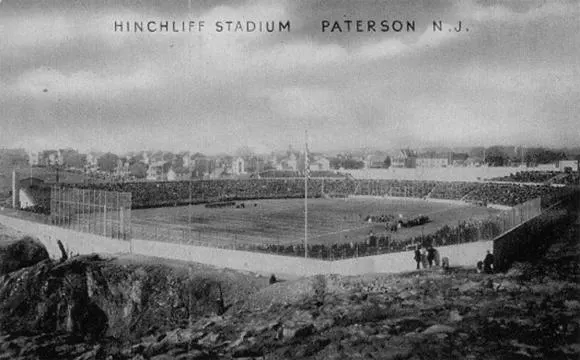
The game was part of a remarkable history unfolding at a municipal stadium that had opened just a year earlier, overlooking the Great Falls of the Passaic River.
Hinchliffe would become a gathering place for generations of Paterson residents. But by the 1990s, deterioration threatened its future.
After a decades-long preservation campaign, the stadium reopened in 2023, linking its celebrated past to a new chapter still taking shape.
A stadium born during the Depression
Paterson’s leaders envisioned a major recreational facility as the Great Depression strained the city’s industrial economy.
The proposal sparked debate over public spending, location and whether one large stadium would serve residents better than several smaller athletic fields. Vera Beggs, Paterson’s first female commissioner, was among those involved in discussions over financing and recreational priorities.
The city ultimately chose a site near the Great Falls that included land formerly used as a reservoir.
Construction began in 1931. Architect John Shaw of Fanning & Shaw designed the stadium, with the Olmsted Brothers contributing to its landscape setting.
The concrete structure, distinguished by its towers and Art Deco details, opened in 1932. Early events included a pageant marking the bicentennial of George Washington’s birth and a formal dedication accompanied by track-and-field competition.
The stadium also honored Paterson sprinter Eleanor Egg, whose national athletic accomplishments earned her recognition beyond New Jersey. A bronze relief by local sculptor Gaetano Federici commemorated her achievements.
By Thanksgiving, the stadium was hosting the football rivalry between Eastside and Central high schools, beginning a tradition that would endure for generations.
Paterson had built a place for its athletes and residents to gather. It would soon become part of a much larger story in American sports.
Baseball beyond the color barrier
During segregation, Black professional baseball teams competed outside the white major leagues, playing at independent ballparks and rented facilities across the country.
Hinchliffe became an important venue for the New York Black Yankees and other Black professional teams.
The September 1933 game against Pittsburgh demonstrated the caliber of talent appearing in Paterson. Gibson, Charleston, Bell and Johnson took the field for the Crawfords, who fell behind when the Black Yankees scored four runs in the first inning.
New York held on for a 6-3 victory.
The stadium also had a connection to one of the players who helped integrate Major League Baseball.
Larry Doby attended Eastside High School, excelling in several sports and playing football at Hinchliffe. He began his professional baseball career with the Newark Eagles in 1942.
Five years later, Doby joined Cleveland, becoming the first Black player in the American League, months after Jackie Robinson broke Major League Baseball’s modern color barrier with the Brooklyn Dodgers.
Hinchliffe’s association with Black professional baseball eventually helped earn it National Historic Landmark designation in 2013.
But its importance extended beyond athletics.
In 1933 and 1934, thousands of silk and dye workers gathered at the stadium during major labor disputes. The rallies brought Paterson’s industrial struggles into the same public space where nationally celebrated athletes competed.
The stadium was becoming a reflection of the city itself.
Paterson’s home field
For many residents, Hinchliffe’s significance came not from famous visitors but from familiar traditions.
Thanksgiving football became one of its defining events.
Eastside and Central, later succeeded by John F. Kennedy High School, drew students, alumni, marching bands and families to games that became fixtures of Paterson’s annual calendar.
The stadium also hosted graduations, track meets and other school activities.
Paterson historian Jimmy Richardson, who graduated there in 1970, later recalled Hinchliffe’s wide range of community uses in an oral-history interview for the National Park Service.
Those uses could be surprisingly varied.
Motorcycle and midget-car racing drew spectators beginning in the 1930s. During World War II, the stadium hosted war-bond events. Entertainers including Abbott and Costello also appeared at Hinchliffe during the 1940s.
In the 1970s, Sly and the Family Stone performed there, bringing another generation of spectators to the historic venue.
The events changed, but Hinchliffe remained a gathering place for Paterson.
That made its eventual closure more than the loss of an aging sports facility. The city was losing a place where generations had celebrated victories, marked milestones and returned to familiar traditions.
The stadium Paterson nearly lost
By the 1990s, Hinchliffe had deteriorated significantly.
Problems with the playing surface, concrete and other parts of the facility raised safety concerns. The Paterson school district faced costly decisions about repairing the stadium or considering demolition.
Demolition was threatened in 1994. An engineering evaluation commissioned that year and revised in 1995 examined the structure’s condition.
Despite serious deterioration, the stadium’s 2004 National Register nomination indicated that much of its original concrete remained capable of rehabilitation.
The stadium closed during the 1990s. Historical accounts differ on the precise date: The National Register nomination places closure in 1996, while New Jersey environmental officials say it closed at the end of the 1996-97 school year.
For local football teams, the loss was immediate.
Eastside and Kennedy had to play elsewhere, including outside Paterson in Wayne.
A stadium built partly to give the city’s young athletes a place to compete could no longer accommodate them.
As the unused facility deteriorated further, graffiti, vegetation and damaged concrete became visible signs of its decline.
Its history alone could not guarantee its survival.
But residents and preservation advocates believed Hinchliffe’s significance and its surviving structure justified another future.
A rescue measured in decades
Paterson resident Brian LoPinto was among those who researched Hinchliffe’s Negro League history and advocated for its preservation.
The effort extended far beyond one person.
In 1997, Preservation New Jersey placed the stadium on its list of endangered historic sites. Friends of Hinchliffe Stadium formally organized in 2002, helping sustain a campaign involving residents, historians, preservation groups and public officials.
National recognition strengthened the campaign.
Hinchliffe entered the National Register of Historic Places in 2004. The National Trust for Historic Preservation named it one of America’s 11 Most Endangered Historic Places in 2010.
In 2013, the stadium became a National Historic Landmark. Congress later expanded the boundaries of Paterson Great Falls National Historical Park to include it, without transferring ownership to the National Park Service.
Those designations established its importance but could not, by themselves, repair the building.
Restoration ultimately required substantial financing and a plan for the stadium’s future.
A redevelopment project brought together public agencies, private developers and preservation specialists. It combined stadium rehabilitation with affordable senior housing, a museum, parking and proposed commercial and community facilities.
Crews repaired deteriorated concrete and modernized the athletic facilities while preserving significant features of the original structure.
In May 2023, Hinchliffe reopened.
After decades of uncertainty, Paterson again had a functioning stadium overlooking the Great Falls.
A second life for Hinchliffe
Athletic competition has returned to Hinchliffe, including school sports, professional soccer and women’s football.
The Eastside–Kennedy Thanksgiving rivalry returned in 2023, reconnecting students with a tradition that had endured across generations of Paterson families.
The Charles J. Muth Museum now interprets the stadium’s Negro League history and its broader place in the community.
The redevelopment also brought affordable senior apartments and a parking garage to the surrounding area.
The restoration represents a substantial preservation achievement. A landmark once threatened with demolition has returned to active use.
Still, reopening does not settle every question about its future.
The redevelopment was intended to provide athletic, cultural and community benefits alongside housing and commercial activity. Maintaining those benefits, ensuring access for students and residents, and sustaining the facility remain important challenges.
Hinchliffe’s significance has never rested solely on its architecture.
During segregation, it provided a stage for Black professional baseball players excluded from the major leagues. Generations of Paterson students later made it their home field. Preservation advocates fought to keep those histories from disappearing with the building.
Now, the stadium has another opportunity to serve the city that built it.
Its next chapter will be shaped by the people who use it.
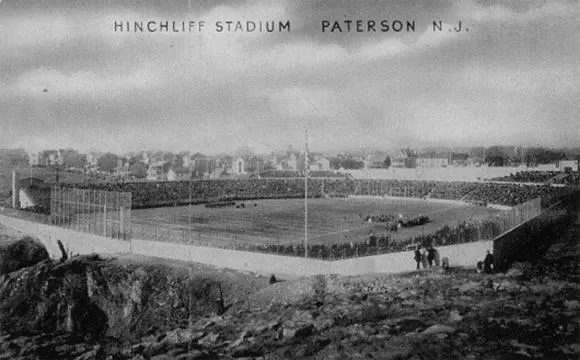
(Photo Credit: Passaic County Department of Cultural & Historic Affairs)
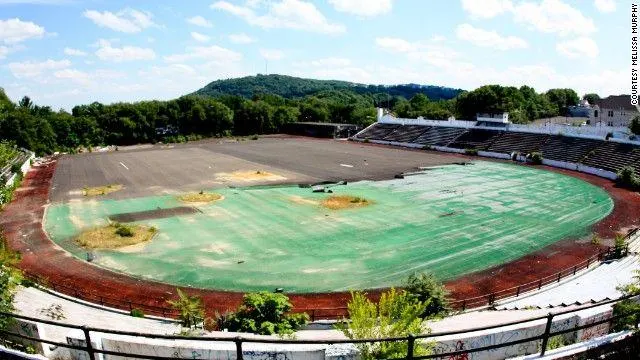
(Photo Credit: KForce/Wikimedia Commons, public domain.)
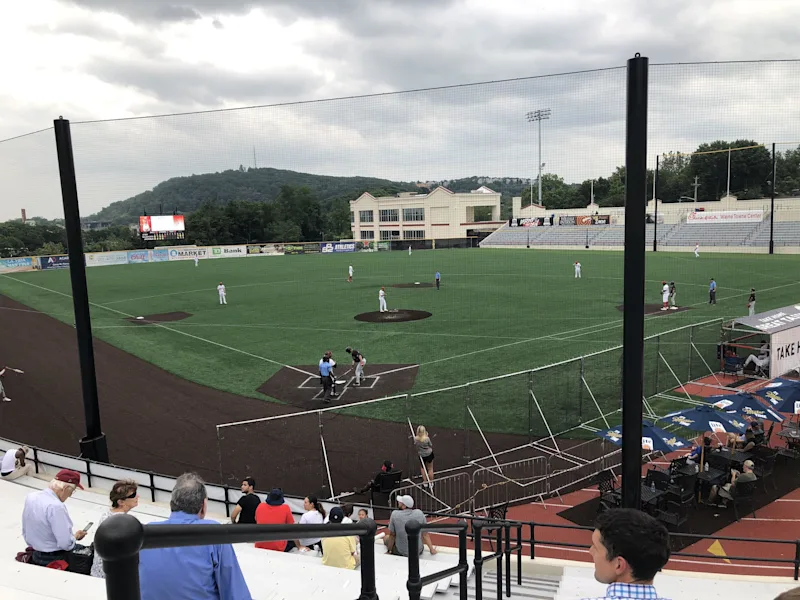
(Photo Credit: Oknazevad/Wikimedia Commons, CC BY-SA 4.0.)


