In 1946, a New Jersey Army lab heard an echo from the moon
Engineers at Camp Evans accomplished a historic first using modified radar equipment, helping lay the groundwork for radar astronomy and space communications.
More Stories


Shortly before noon on Jan. 10, 1946, two engineers at an Army laboratory in Wall Township heard something no one had successfully detected before: a radar echo from the moon.
Herbert Kauffman and Harold Webb had been trying to detect signals reflected from the lunar surface. At 11:58 a.m., Kauffman heard an unusual sound coming from their equipment.
He called Webb's attention to it. Soon, both men could hear the faint returning signal.
The radar pulse had traveled roughly 480,000 miles, from New Jersey to the moon and back.
But the two men weren't ready to celebrate publicly. They wanted to make certain they hadn't mistaken some other signal for a lunar echo.
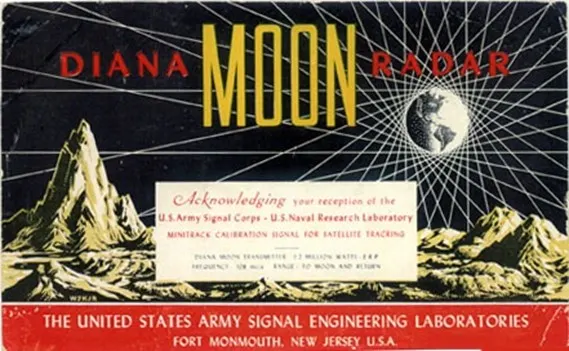
Their discovery was part of Project Diana, a U.S. Army Signal Corps experiment at Camp Evans that became the first documented successful radar experiment to detect signals reflected from the moon.
Eighty years later, the achievement is recognized as a milestone in the development of radar astronomy and space communications.
An ambitious experiment
Project Diana grew out of advances in radar technology during World War II.
The experiment was directed by Lt. Col. John H. DeWitt Jr., who had unsuccessfully attempted to bounce radio signals off the moon in 1940. After the war, he led a team that adapted existing radar equipment for another attempt.
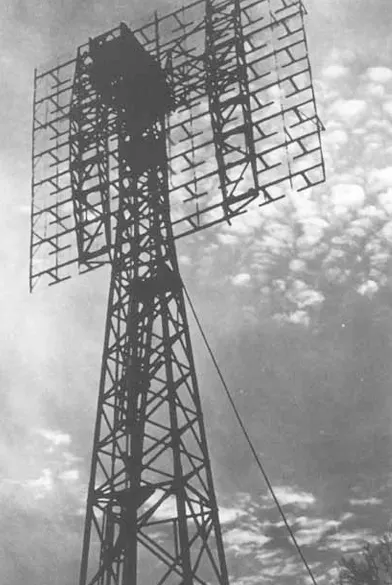
The engineers assembled a powerful transmitter, a large antenna array and a highly sensitive receiver.
The challenge was enormous. The moon was approximately 240,000 miles away, and only a tiny fraction of the transmitted radio energy would return to Earth.
The engineers also had to account for the movement of Earth and the moon, which slightly changed the frequency of the returning signals.
DeWitt's engineering group included E. King Stodola, Herbert Kauffman, Harold Webb and Jack Mofenson, with other laboratory personnel contributing to the effort.
Among those contributors was Walter S. McAfee, a Black physicist and mathematician working in the laboratory's Theoretical Studies Group.
McAfee performed calculations concerning how much radar energy the lunar surface would reflect, helping estimate the strength of the signal the engineers might receive. His contribution was specifically credited by Mofenson in an April 1946 technical article describing the experiment.
A signal from the moon
The echo arrived approximately 2.5 seconds after transmission, consistent with the time required for radio waves to travel to the moon and back.
According to Webb's account, the first echoes were audible but could not be seen on the oscilloscope, an instrument used to display electrical signals.
They repeated the experiment the following day. This time, multiple people heard the echoes and observed them on the screen.
The Army publicly announced the achievement later that month.
During a radio program later in January, members of the team repeated the experiment, allowing listeners to hear a radar echo returning from the moon.
A lasting legacy
Project Diana demonstrated that radar signals could pass through Earth's ionosphere, reach the moon and return.
The achievement helped establish radar astronomy, a technique scientists later used to study objects throughout the solar system.
It also demonstrated a principle that would find practical application in long-distance communications.
In 1954, researchers at the U.S. Naval Research Laboratory successfully transmitted human voices using radio signals reflected from the moon. By 1959, the Navy had developed an operational moon-relay communications system linking the Washington area and Hawaii. The system was publicly demonstrated in January 1960.
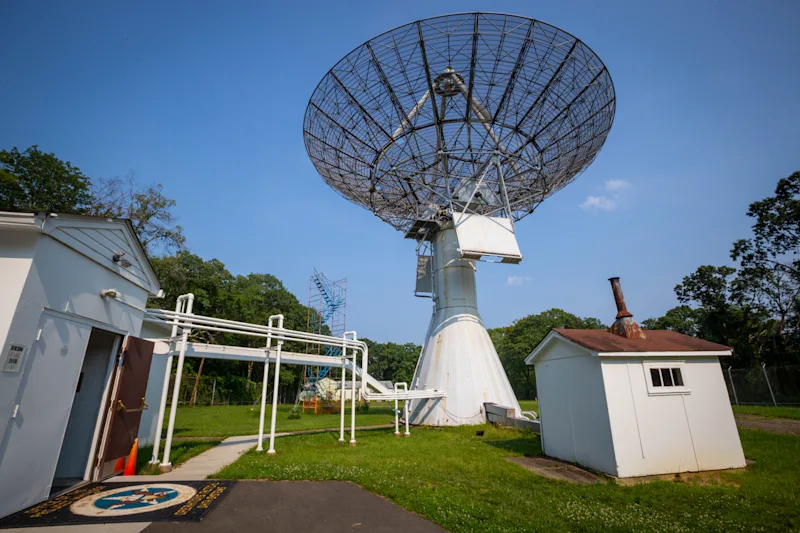
In 2019, the Institute of Electrical and Electronics Engineers recognized Project Diana as a historic engineering milestone, citing its role in the beginnings of radar astronomy and space communications.
More than a decade before the Soviet Union launched Sputnik, engineers at a New Jersey Army laboratory had already sent radio signals to the moon and heard them come back.