How one New Jersey neighborhood tried to reinvent the American suburb
In 1929, families began moving into Radburn, an ambitious Fair Lawn development designed to separate pedestrians from traffic. The Great Depression derailed its grand plans, but the neighborhood survived.


On an April evening in 1929, three couples gathered inside a new house on Allen Place in Fair Lawn and jokingly elected a mayor, police chief and fire chief.
The neighborhood was barely a neighborhood.
Jim and Emma Wright had moved into 2 Allen Pl. on April 25. Two days later, Howard and Lillian Zeller and Fred and Kathy Veile arrived at their newly built homes.
Kathy Veile recalled in a 1978 interview that the couples gathered at the Wrights' home that evening. Surrounded by woods, fields and ongoing construction, the neighbors assigned themselves imaginary offices.
They were among the first residents of Radburn, a planned community whose developers envisioned far more than the handful of houses taking shape in Bergen County.
They wanted to reinvent the American suburb.
A town for the motor age
Radburn was conceived in the late 1920s by the City Housing Corporation, led by developer Alexander Bing. Its principal planners, Clarence Stein and Henry Wright, envisioned a community where automobiles could coexist with residential life without dominating it.
Their solution was to separate pedestrians from traffic.
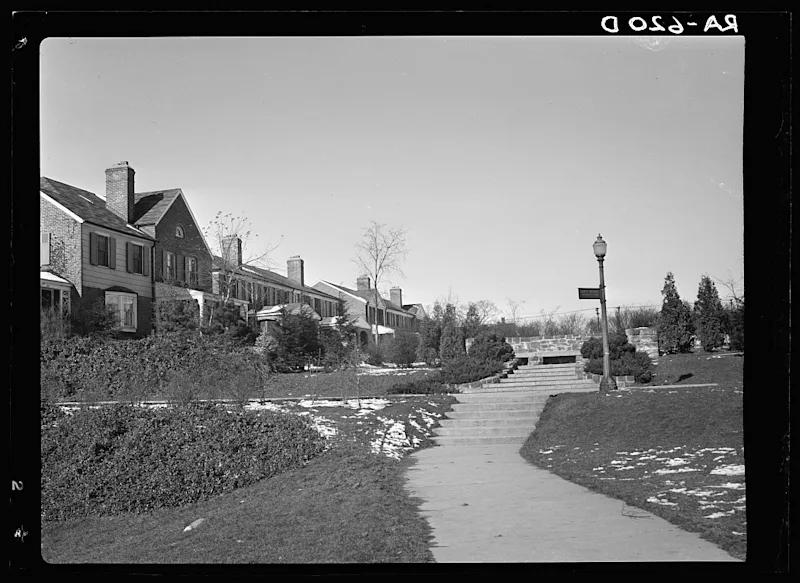
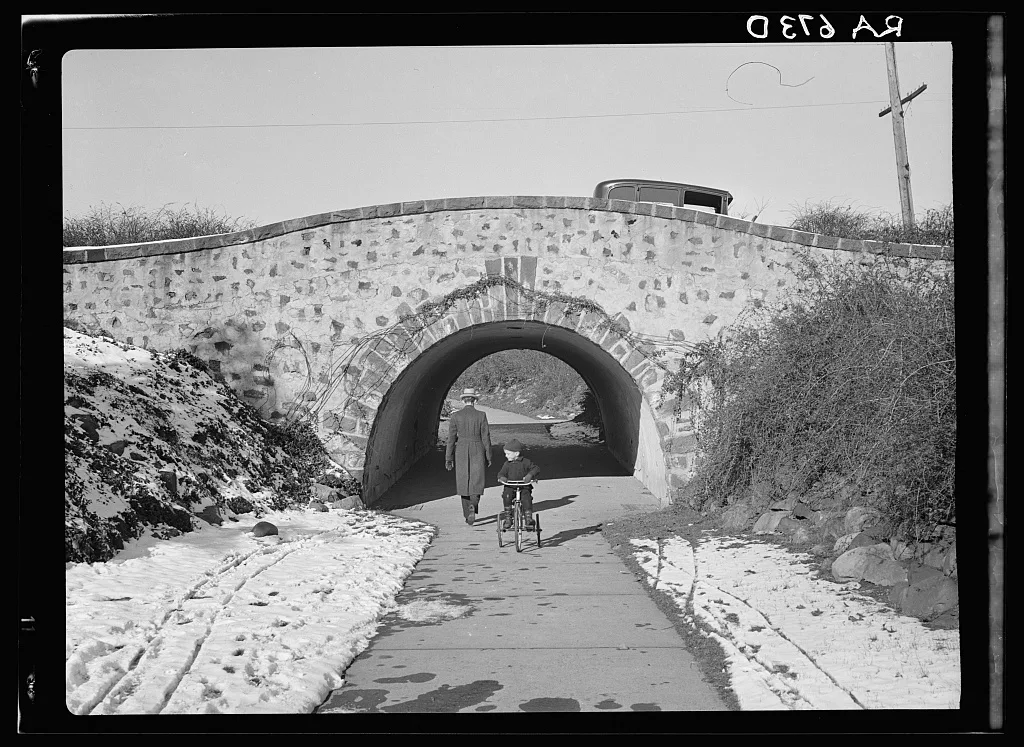
Cars reached homes along short, dead-end streets. Many houses faced shared green spaces, while separate pedestrian paths connected residential areas, parks and community facilities.
Underpasses allowed people to walk beneath certain roads without crossing automobile traffic.
The planners called their large residential blocks "superblocks." The idea was to create places where children could play and neighbors could walk without constantly encountering cars.
Radburn's original plans called for approximately 25,000 residents, along with schools, shopping areas and recreational facilities.
Its developers promoted the project as a "town for the motor age."
Buying a different kind of life
Radburn's sales pitch went beyond architecture.
The development promised convenient commuting, recreational opportunities and a community organized around family life.
For some of the first families, the prospect of building a new community was part of the appeal.
Harriet Roeder, who moved to Allen Place with her husband in August 1929, later recalled that many residents were young professionals looking for something different.
But the reality was less polished than the advertisements.
There were few trees to provide shade. Residents traveled to Paterson for shopping and banking, while vendors delivered food directly to the neighborhood.
Kathy Veile, who had a car, collected grocery orders from neighbors before driving to Ridgewood.
The families were living in a place that had been carefully planned but was far from finished.
They began creating a community of their own, organizing activities, attending meetings and forming friendships amid the construction.
The Depression changes everything
Six months after Radburn's first families arrived, the stock market crashed.
The development did not immediately grind to a halt. Additional homes and apartments were completed, and construction continued on a smaller scale during the early years of the Great Depression.
But the project's finances became increasingly difficult.
City Housing Corporation had invested heavily in land, infrastructure and facilities for a much larger community. As the economy deteriorated, home sales slowed and some residents struggled to make payments.
In April 1934, the developer was still promoting new houses on Barry Place.
A rendering of a model home appeared in the Bergen Evening Record beneath the headline, "The Home with a Future," according to historical research by Rick Hampson and Stephen Taylor.
Less than five months later, City Housing Corporation filed for bankruptcy reorganization.
The company had planned an entire town. Only a portion of that vision had been built.
The limits of a progressive vision
Radburn's innovative design did not mean its early housing practices were equally progressive.
Research by Radburn historian Rick Hampson, drawing on archival records and interviews, found that Black prospective residents were systematically excluded during the community's first two decades, largely through informal sales practices rather than written restrictions.
Some Jewish prospective buyers also encountered discrimination, although Jewish families were among Radburn's earliest residents.
Meanwhile, residents continued building their own community through civic organizations, neighborhood activities and shared facilities.
What survived
Radburn never reached the scale its developers imagined.
Yet the neighborhood remained, with its shared parks, pedestrian pathways, underpasses and distinctive arrangement of homes.
Its design influenced later planned communities, including Greenbelt, Maryland, where planners adapted Radburn's approach to pedestrian routes, shared green spaces and automobile access.
Today, Radburn remains part of Fair Lawn.
Allen Place, where the Wrights, Zellers and Veiles began their lives in the unfinished development in April 1929, remains part of the neighborhood.
The proposed town of 25,000 people was never completed.
But the community those first residents helped establish outlasted the company that planned it.