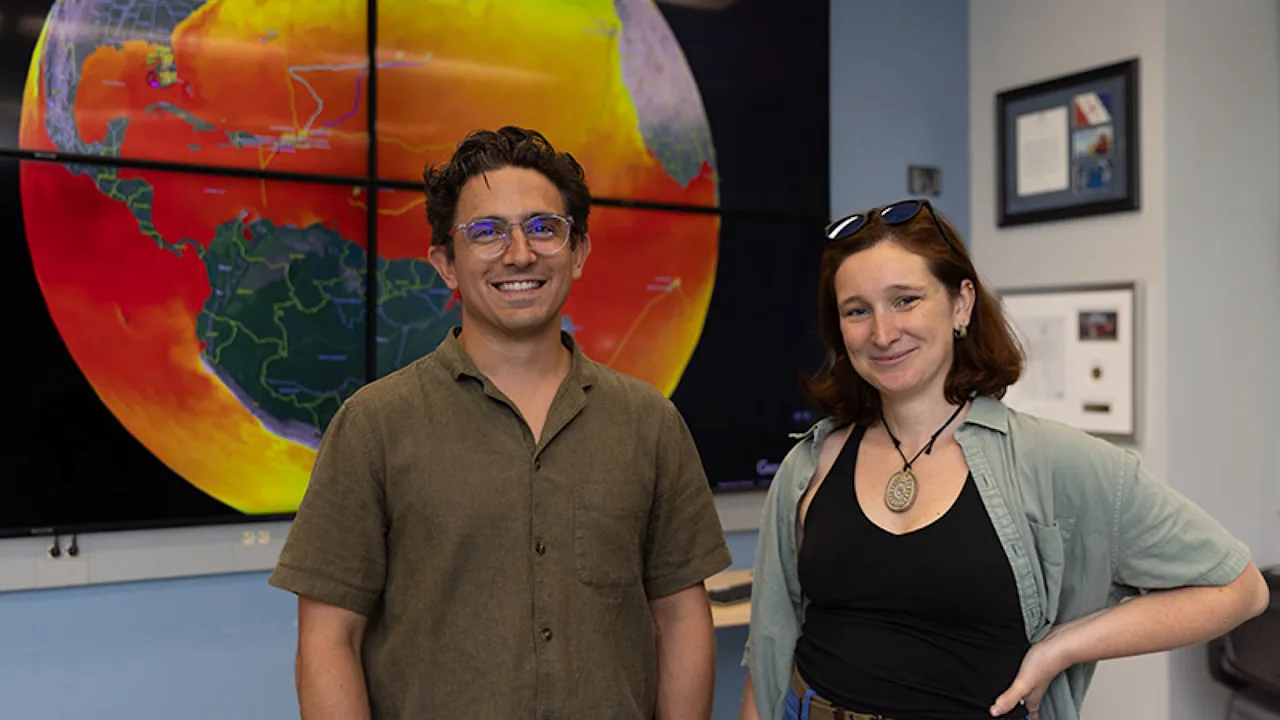
Rutgers oceanographers to embark on landmark Atlantic research mission
Joe Gradone and Corday Selden will lead a 25-day research expedition in the Atlantic Ocean with a team of 19 scientists.
More Stories


Two Rutgers oceanographers are preparing to lead a 25-day research expedition in the Atlantic Ocean.
On Aug. 7, Joe Gradone and Corday Selden will board the research vessel, Falkor (too), in Bridgetown, Barbados.
Two days later, the ship will depart with a team of 19 scientists for an ambitious mission in the Atlantic.
The voyage is supported by the Schmidt Ocean Institute, a nonprofit organization that operates the 363-foot vessel as a global platform for ocean science.
Through a competitive selection process, the institute provides researchers with access to ship time, advanced technology and technical support at no cost.
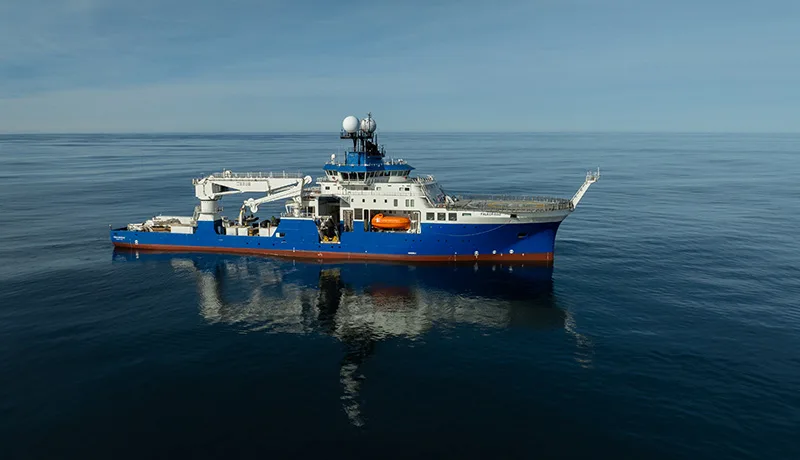
The Falkor (too) is equipped with eight laboratories, advanced sonar systems and high-performance computing capabilities, allowing researchers to collect, process and analyze data while working far from shore.
The voyage marks the first time either scientist will serve as a chief scientist on a major research expedition. Gradone is an assistant research professor, while Selden is an assistant professor in the Department of Marine and Coastal Sciences within the School of Environmental and Biological Sciences.
Gradone's research focuses on physical oceanography and autonomous platforms, including robotic gliders that allow scientists to observe the ocean below the surface. Selden specializes in the biological and chemical sampling that will occupy much of the team's time at sea.
Together, they are working to connect the ocean's fine-scale physical structure with its chemistry and biology.
The team will study a process known as salt-finger mixing, which occurs when layers of seawater with different temperatures and salinity levels interact. Although the movements occur on a small scale, they may influence marine ecosystems, ocean chemistry and the movement of carbon through the sea.
The researchers hope to gain a better understanding of how ocean circulation drives mixing and how those processes affect ocean life.
Some questions may be answered during the expedition, while samples collected at sea will be analyzed after the team returns to shore.
"This project is very important for both of us," Selden said. "It's going to be a big part of how we move forward and establish ourselves in our careers."