Removal of Pride paint from West Orange Town Hall steps draws community pushback
Advocates say the timing of the paint’s removal, ahead of Pride Month celebrations, was particularly upsetting.



The removal of a Pride flag that had been painted on the front steps of West Orange Town Hall since 2022 has sparked a community conversation about visibility, inclusion and support for LGBTQ+ residents.
The flag was recently painted over, prompting concerns from residents and advocates who say it had become a symbol of acceptance and being welcomed in the township.
Advocates say the timing of the flag’s removal, ahead of Pride Month celebrations, was particularly upsetting.
"It really sent a big message to the LGBTQ community that, like, symbolism was negotiable here in West Orange, and that inclusivity did no longer live here," said Brielle Winslow-Majette, executive director at Garden State Equality.
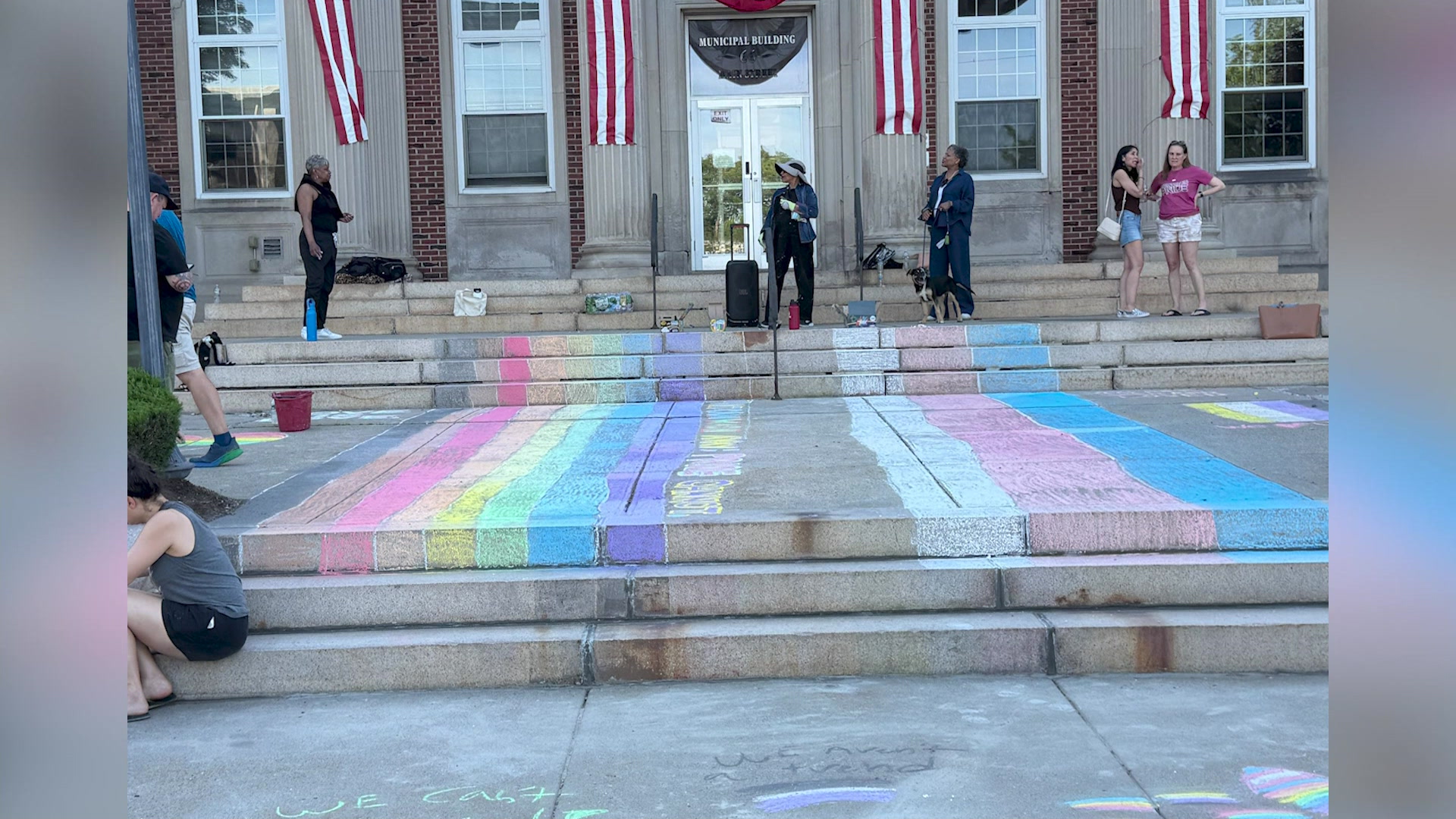
Organizers and supporters gathered outside Town Hall for a rally, where community members used chalk to recreate the Pride flag on the steps and placed Pride flags around the property. Organizers said those flags were later removed.
Mayor Susan McCartney addressed the concerns in a statement, saying she remains committed to fostering a welcoming and inclusive community.
“I recognize the disappointment and hurt that resulted from the timing and circumstances surrounding the repair of the Town Hall steps,” McCartney said. “I understand that earlier communication, collaboration, and engagement could have helped prevent misunderstandings and frustration. For that, I sincerely apologize.”
The mayor said township officials recently met with representatives from Garden State Equality, the West Orange Human Relations Commission and other community leaders to discuss concerns and explore ways to move forward.
According to McCartney, several alternative Pride Month initiatives have since been implemented, including Pride-themed messaging on the Town Hall electronic sign, Pride lighting at Town Hall and Pride banners displayed throughout the township.
For advocates, the conversation is about more than a display on Town Hall steps. They say they hope the attention surrounding the issue leads to continued dialogue about representation and inclusion in West Orange.
"I felt bad for the youth who walk past these stairs all the time, and it really lets them know that even if they're not out to their parents, even if they're not out in community, the community saw them," Winslow-Majette added. "It made them feel like there was a place for them."